Over the past few months, llms.txt has become one of those things that shows up in every SEO newsletter, every LinkedIn post, and eventually in a message from a client asking why their site doesn't have one.
The pitch is appealing. Add a single Markdown file to your root directory, and AI systems like ChatGPT, Claude, and Google's AI Overviews will understand your site better and cite you more often. It sounds like robots.txt for the AI era.
There's now enough evidence to answer the question properly. The short version: for the vast majority of businesses, llms.txt is not worth your time. Google has said so directly, and the crawl data backs it up.
What llms.txt Was Supposed to Do
The llms.txt specification proposes a Markdown file at your domain root — yoursite.com/llms.txt — containing a curated summary of your site with links to your most important pages.
The reasoning behind it is sound. Large language models work within a limited context window. HTML pages are full of navigation, scripts, cookie banners, and markup that waste that budget. A clean Markdown summary would, in theory, let an AI system grasp your site efficiently.
It's a genuinely reasonable idea. The problem is that nobody with a major AI crawler agreed to read it.
What Google Actually Said
This is where the case falls apart. Google's AI optimisation guidance, updated in June 2026, states it plainly:
You don't need to create new machine readable files, AI text files, markup, or Markdown to appear in Google Search (including its generative AI capabilities), as Google Search itself doesn't use them.
That's not ambiguous. Google's own AI-features documentation lists llms.txt among tactics you do not need for AI Overviews or AI Mode.
Gary Illyes said at Search Central Live in July 2025 that Google does not support llms.txt and has no plans to. When John Mueller was asked whether Google publishing its own llms.txt file counted as an endorsement, his answer was about as direct as Google gets: "I'm tempted to say something snarky since this has come up so often, but to be direct, no."
Mueller also drew a comparison worth sitting with — he likened llms.txt to the old keywords meta tag: a file where a site declares what it's about, when the search engine would rather just read the site and decide for itself.
Anyone who was doing SEO in 2009 knows how that story ended. Self-reported relevance signals get ignored, because they're trivially gamed.
The Crawl Data Is Worse Than the Statements
Official positions are one thing. Actual bot behaviour is another, and it's more damning. An analysis of 137,000 websites found:
Finding
Result
Sites that had published an llms.txt file
28%
Of those files, how many were never requested by any bot
97%
Read that second row again. Nearly every llms.txt file that exists has never been fetched — not by Google, not by OpenAI, not by Anthropic, not by Perplexity.
These aren't files that got crawled and ignored. They were never opened at all. A quarter of the web built a door that nobody has knocked on.
If you want to check this on your own site, don't take anyone's word for it. Open your raw server access logs and search for requests to /llms.txt. On the sites we've looked at, the count is almost always zero. That's a five-minute check, and it's more persuasive than any blog post — including this one.
So Why Does Everyone Keep Talking About It?
Three reasons, and none of them are "it works."
It's easy to sell. "Add this file" is a concrete, cheap deliverable. It looks like progress on an invoice. Real AI visibility work — earning citations, building genuine subject authority, getting mentioned on sites that models actually train on and retrieve from — is slow and much harder to package.
Tools shipped support for it. Yoast added an llms.txt feature. Various generators appeared. Once tooling exists, adoption follows, and adoption gets mistaken for effectiveness. The file being easy to create says nothing about whether it's read.
Correlation gets misread as causation. Sites that publish llms.txt tend to be run by teams who follow SEO closely and do a lot of other things well. When those sites show up in AI answers, the file gets the credit that belongs to the underlying content quality and authority.
What Actually Influences AI Visibility
The uncomfortable answer is that it looks a lot like good SEO — which is roughly what Google has been saying all along.
Ahrefs recently studied 331,000 pages and reached a conclusion worth repeating: Google doesn't punish AI content, it punishes bad content. The same principle applies here. There's no file that substitutes for being genuinely worth citing.
What does move the needle:
Content that answers a question completely and can be quoted. AI systems extract passages. Clear, self-contained, factually accurate sections get pulled; rambling ones don't.
Being mentioned elsewhere. Models retrieve from and are trained on the wider web. Getting cited on sites that already have authority matters far more than anything in your root directory. This is digital PR and content strategy work, not a technical checkbox.
A site that renders fast and clean. If your key content only appears after heavy JavaScript execution, retrieval systems may never see it. This is ordinary technical site quality, and it was already worth fixing.
Structured data. Unlike llms.txt, Schema.org markup is documented, actively consumed, and used by Google. If you want a machine-readable file that genuinely gets read, this is the one.
Clear, consistent entity information. Who you are, what you do, and where — stated the same way across your site and off it.
None of that is new. That's rather the point. The teams doing well in AI search are largely the teams that were already doing the fundamentals properly.
The Honest Recommendation
Skip it — for now.
If you have a spare ten minutes and a developer already in the codebase, adding an llms.txt file is harmless. It won't hurt your rankings. Google has said it's "fine," which is a long way from saying it's useful.
But if creating and maintaining one would take real hours, displace other work, or appear as a line item on an agency invoice — that's a bad trade. You'd be maintaining a second copy of your site structure that must be kept in sync, in exchange for no demonstrated benefit.
The exception: if you run developer-facing documentation, there's a real case. Tools like Cursor and Claude Code can be pointed at documentation directly, and some documentation platforms have adopted the format meaningfully. If your users are developers who will actively feed your docs to an AI coding assistant, llms.txt may earn its keep. That's a genuine use case — it's just not the one being marketed to most businesses.
Revisit if this changes: if OpenAI, Anthropic, or Google announce official support, the maths changes overnight. It's worth watching. It's not worth pre-emptively building for.
Frequently Asked Questions
Does Google use llms.txt?
No. Google's AI-features documentation, updated June 2026, states that Google Search does not use machine-readable AI text files, and Gary Illyes confirmed there are no plans to support it. Google publishes its own llms.txt file, but John Mueller has explicitly said this is not an endorsement.
Will adding an llms.txt file hurt my SEO?
No. It's a static file that search engines ignore. There's no ranking penalty. The cost is the time spent creating and maintaining it, not any risk to your rankings.
Do ChatGPT or Claude read llms.txt?
There's no confirmed automatic support from any major AI provider. The crawl data is the clearest signal here — in a study of 137,000 sites, 97% of published llms.txt files were never requested by any bot at all.
What should I do instead to show up in AI answers?
Focus on content that's genuinely quotable and complete, earning mentions on authoritative third-party sites, fast clean rendering, and Schema.org structured data. These are documented, actively consumed signals — unlike llms.txt.
Is llms.txt the same as robots.txt?
No. robots.txt is a long-established standard that crawlers genuinely obey and that controls access. llms.txt is a proposed format that suggests content, and major AI crawlers have not adopted it.
The Takeaway
llms.txt is a sensible idea that hasn't been adopted by the systems it was designed for. Google has said it doesn't use it. The crawl logs show almost nobody else does either.
Being cited by AI systems comes from the same place it always has: being genuinely useful, clearly structured, and referenced by other people. There's no file you can upload that shortcuts that.
If you're unsure where your site actually stands in AI search — as opposed to where a checklist says it should — get in touch. We'll look at your real server logs and tell you honestly what's worth fixing.
Did you know that 53% of mobile users leave a website if it takes longer than 3 seconds to load? In the fast-paced digital world, users demand instant access to information. If your website loads slowly, you’re not just testing their patience—you’re losing potential customers, damaging your SEO rankings, and hurting your revenue.
In this blog, we’ll explore how slow websites can kill your business, the true costs of poor page speed, and how you can fix it to boost conversions, user experience, and SEO performance.
The Impact of Slow Website Speed on User Experience
Imagine this: A potential customer visits your website to check out a product or service. Instead of loading instantly, the page lags, taking 5-6 seconds to fully display. Frustrated, they hit the back button and go straight to your competitor.
This scenario plays out every day for businesses with slow websites. Here’s how poor page speed negatively affects user experience:
High Bounce Rates
Visitors leave quickly when they experience delays.
A study by Google found that a 2-second delay increases bounce rates by 32%, while a 5-second delay increases it by 90%.
Negative Brand Perception
A slow website signals poor quality and untrustworthiness.
Customers may assume your business is outdated or unprofessional.
Reduced Engagement & Conversions
Visitors are less likely to browse more pages or complete a purchase.
Slow load times affect key actions like signing up for newsletters, making payments, or filling out contact forms.
Example: If an e-commerce store takes more than 3 seconds to load, users are 79% less likely to return.
The SEO Consequences of a Slow Website
Google has officially stated that page speed is a ranking factor for SEO. If your site is slow, your rankings suffer, which means less organic traffic and fewer leads.
Core Web Vitals & SEO Impact
Google’s Core Web Vitals focus on three key factors related to page speed:
Largest Contentful Paint (LCP) – Measures how quickly the main content loads.
First Input Delay (FID) – Measures how interactive your site is.
Cumulative Layout Shift (CLS) – Measures stability during loading.
A slow-loading website negatively affects all three, pushing your site lower in search results.
Reduced Google Crawling Efficiency
Googlebot allocates limited crawl budget to each website. A slow website means fewer pages get indexed, reducing your chances of ranking well.
Lower Mobile Search Rankings
Since Google uses mobile-first indexing, slow mobile pages hurt rankings even more.
Case Study: A travel blog improved its page speed from 5 seconds to 2 seconds, leading to a 30% increase in organic traffic.
Slow Websites Lead to Lost Conversions & Revenue
Website speed isn’t just about user experience—it directly impacts your sales and revenue.
Every Second of Delay = Lost Sales
Amazon reported that a 1-second delay in load time could cost them $1.6 billion in annual revenue.
For small businesses, a slow website means losing potential customers to competitors.
Cart Abandonment Rates Skyrocket
75% of online shoppers say they won’t return to a site that was too slow.
A slow checkout process leads to higher abandoned carts and lost sales.
Lower Trust & Credibility
A sluggish website gives the impression of poor customer service and security risks.
Users are less likely to enter payment details on a slow-loading site.
Example: A SaaS company improved its load time by 1.5 seconds and saw a 15% increase in subscriptions.
Mobile Users Suffer the Most
With more than 60% of web traffic coming from mobile devices, page speed is even more critical.
Mobile Users Are Less Patient
Mobile users expect instant access and won’t wait for a slow page to load.
Network issues (like 3G or slow WiFi) make slow websites even worse.
Google’s Mobile-First Indexing Affects Rankings
Since 2018, Google ranks websites based on their mobile performance.
A slow mobile website loses rankings faster than a slow desktop site.
Fact: 70% of consumers say page speed directly influences their purchasing decisions on mobile.
The Hidden Costs of a Slow Website
Beyond lost customers and rankings, a slow website comes with additional hidden costs:
Increased Server Costs
A slow site uses more server resources, increasing hosting expenses.
Poor performance leads to higher bandwidth consumption.
Wasted Ad Spend
Businesses investing in Google Ads or Facebook Ads lose money if the landing page loads slowly.
A high bounce rate means lower Quality Score, leading to higher ad costs.
Lost Referral & Social Traffic
Slow pages don’t perform well on social media platforms.
If a page takes too long to load, users won’t share or link to it.
Example: A marketing agency reduced bounce rates by 40% just by improving page speed.
How to Improve Your Website Speed (Quick Fixes & Long-Term Solutions)
Optimize Images & Videos
Compress large images using TinyPNG or JPEG Optimizer.
Use next-gen formats like WebP for faster loading.
Use a Content Delivery Network (CDN)
CDNs store copies of your website across global servers to reduce load time.
Minify & Combine CSS, JavaScript, and HTML
Remove unnecessary code spaces and comments to improve efficiency.
Enable Browser Caching
Stores static files on users' browsers, reducing load time on repeat visits.
Upgrade to Faster Hosting
Choose a reliable, high-speed hosting provider like SiteGround, Cloudways, or WPX Hosting.
Use Website Speed Testing Tools
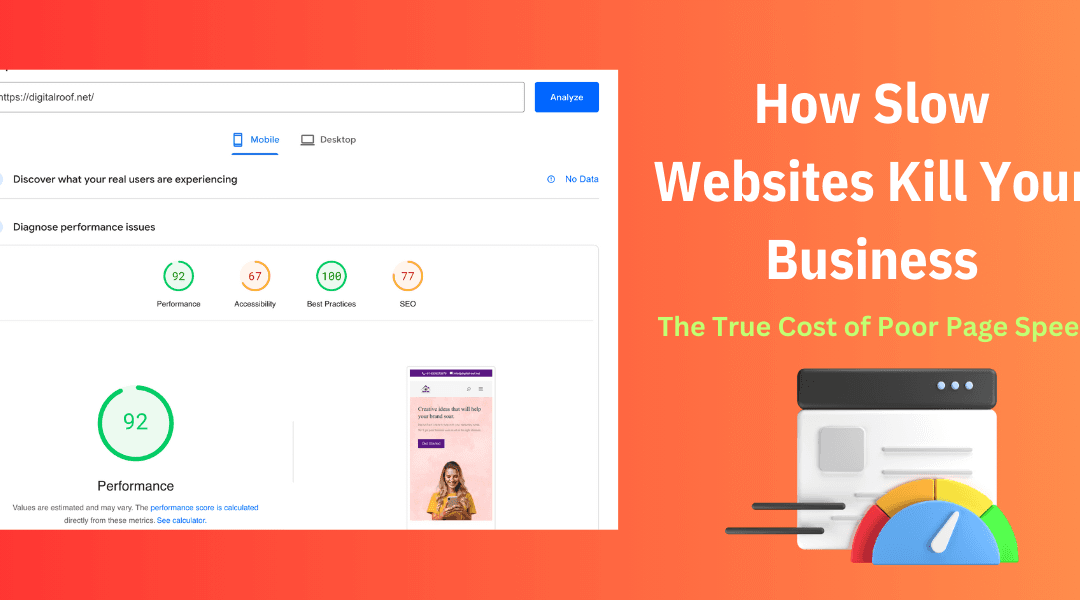
Regularly check performance with Google PageSpeed Insights, GTmetrix, and Lighthouse.
Conclusion
A slow website doesn’t just annoy visitors—it kills conversions, reduces SEO rankings, and costs you revenue. Businesses that prioritize fast page speeds gain higher engagement, better search visibility, and increased sales.
If your website is slow, it’s time to take action! Start by optimizing your images, using a CDN, enabling caching, and upgrading your hosting.
Need help improving your website speed? Contact us today for a free audit!
Success in today's digitally driven, fast-paced corporate environment depends on being ahead of the curve. The importance of digital marketing is greater than ever as the globe moves more and more into the digital sphere. This blog seeks to clarify expectations around digital marketing services and how your company might benefit from them.
What Are Digital Marketing Services?
Digital marketing services encompass a comprehensive range of strategies and techniques tailored to harness the full potential of the digital landscape. In today's interconnected world, these services are indispensable for businesses seeking growth, visibility, and a competitive edge. Their significance lies in their ability to reach and engage with a vast online audience, ultimately driving business objectives and fostering brand success.
Within the realm of digital marketing, several key components play pivotal roles in achieving these goals:
1. Search Engine Optimization (SEO): SEO involves optimizing your website to rank higher in search engine results. This ensures that your business is more discoverable when potential customers search for relevant keywords. SEO practices include keyword research, on-page optimization, and link building.
2. Social Media Marketing: Social media platforms are hubs of activity, making them ideal for brand promotion and customer engagement. Digital marketing services use platforms like Facebook, Twitter, Instagram, and LinkedIn to build brand awareness, connect with audiences, and drive traffic to websites.
3. Email Marketing: Email marketing remains an effective way to nurture leads and engage with existing customers. Digital marketing services use email campaigns to deliver tailored content, promotions, and updates directly to subscribers' inboxes.
4. Pay-Per-Click (PPC) Advertising: PPC advertising allows businesses to place ads on search engines and other platforms and pay only when users click on them. This targeted approach can quickly drive traffic and conversions, making it a valuable component of digital marketing services.
5. Content Marketing: Content marketing revolves around creating and sharing valuable, relevant, and consistent content to attract and retain a clearly defined audience. Blogs, videos, infographics, and other content types are used to establish authority in a niche and engage with potential customers.
The Benefits of Digital Marketing Services
Utilizing digital marketing services offers businesses a plethora of advantages that are essential for thriving in today's digital age. These benefits go beyond traditional marketing approaches and can make a significant impact on your overall business success. Here are some key advantages:
1. Cost-Effectiveness: Digital marketing services are often more cost-effective than traditional advertising methods. Online advertising platforms, like PPC and social media advertising, allow you to set and control your budget, ensuring that you get the most value for your investment. This means even small businesses can compete effectively in the digital space.
2. Targeting the Right Audience: With digital marketing, you have the power to precisely target your ideal audience. Through tools like audience segmentation and data analytics, you can ensure that your marketing efforts reach the people most likely to be interested in your products or services. This precision maximizes the efficiency of your marketing budget.
3. Measurable Results: Digital marketing provides the advantage of measurable results. You can track and analyze data in real-time, enabling you to see the immediate impact of your campaigns. Metrics such as website traffic, conversion rates, click-through rates, and engagement levels offer valuable insights into campaign performance.
4. Ability to Adapt and Optimize Campaigns: One of the standout benefits of digital marketing is its flexibility. You can easily adjust your campaigns based on real-time data and feedback. If a particular strategy isn't working as expected, you can pivot quickly and optimize your approach for better results. This agility is crucial in today's rapidly changing business environment.
5. Global Reach: Digital marketing services allow you to expand your reach globally. Whether you're a local business looking to attract a broader audience or an e-commerce store targeting international markets, the digital landscape offers the tools and platforms to reach a wide and diverse audience.
Engage with Us: Have questions or need further guidance? We're here to help! Feel free to reach out to us through our contact page or connect with us on social media for ongoing insights and discussions.
In today's rapidly evolving digital landscape, where online visibility can make or break a business, Search Engine Optimization (SEO) has emerged as a critical tool for success. It's the secret sauce that ensures your website not only exists but thrives amidst the vast expanse of the internet. Yet, as businesses navigate this digital frontier, one question consistently looms large: "How much do SEO services cost?"
Understanding SEO Services
What is SEO?
Start by defining SEO (Search Engine Optimization) as the practice of optimizing your website and online content to improve its visibility in search engine results.
Explain that the primary goal of SEO is to increase organic (non-paid) traffic to your website.
The Role of SEO in Online Visibility
Emphasize the importance of SEO in today's digital age, where the majority of online experiences begin with a search engine query.
Discuss how SEO helps businesses and websites rank higher in search engine results pages (SERPs), leading to increased exposure and potential customer engagement.
Aspects of SEO
On-Page SEO
Define on-page SEO as the practice of optimizing individual web pages to improve their search engine ranking.
Mention key elements of on-page SEO, such as keyword optimization, meta tags, and content quality.
Off-Page SEO
Explain off-page SEO as the efforts made outside your website to improve its visibility and authority.
Discuss backlinks (external links pointing to your site), social media, and online reputation management as key components of off-page SEO.
Technical SEO
Introduce technical SEO as the optimization of your website's technical elements to improve its search engine performance.
Mention technical aspects like website speed, mobile-friendliness, site architecture, and XML sitemaps.
Factors Influencing SEO Costs
Competition Level
The SEO Arena
Describe the competitive landscape within the digital realm, where businesses vie for top positions in search results.
Explain how the level of competition in your industry or niche can significantly affect the cost of SEO services.
Use examples or statistics to illustrate the varying degrees of competition across industries.
Geographic Location
Location Matters
Discuss how the geographic location of your business and target audience plays a pivotal role in SEO pricing.
Explain that businesses in highly competitive or densely populated areas may face higher SEO costs.
Highlight the importance of local SEO for businesses targeting a specific geographical area.
Business Goals
Tailoring SEO to Objectives
Explore how the specific goals and objectives of a business can influence the SEO strategy and, consequently, pricing.
Discuss common objectives like increasing website traffic, generating leads, or boosting e-commerce sales.
Mention that different goals may require varying levels of SEO effort and investment.
Current Website Condition
The State of Your Digital Home
Describe how the existing condition of a website is a critical factor in determining SEO costs.
Discuss factors like site structure, content quality, and technical issues that can impact SEO.
Explain that websites in need of extensive optimization may require more time and resources, affecting pricing.
Types of SEO Pricing Models
Monthly Retainer
Consistent SEO Support
Define the concept of a monthly retainer in the context of SEO services.
Explain that a monthly retainer involves an ongoing partnership with an SEO agency or consultant.
Describe how clients pay a predetermined monthly fee for continuous SEO support.
Project-Based
SEO Projects and Specific Tasks
Discuss the project-based pricing model for SEO, which is suitable for one-time projects or specific tasks.
Explain that project-based pricing involves a fixed fee for a defined scope of work.
Give examples of SEO projects, such as website audits, keyword research, or content optimization, that can be priced using this model.
Hourly Rates
Paying by the Hour
Describe how some SEO consultants or agencies charge clients based on hourly rates.
Explain that hourly rates are typically applied to tasks or consultations that don't fit neatly into a retainer or project-based structure.
Highlight that hourly rates can vary based on the experience and expertise of the SEO professionals.
As you contemplate your SEO journey, remember that there's no one-size-fits-all answer to the question of SEO costs. Your unique needs and budget should be the guiding factors in your decision-making process.
Should you have further questions or require assistance in navigating the SEO landscape, don't hesitate to reach out to us. We're here to help you achieve your online goals and ensure that your business thrives in the ever-evolving digital realm. Your success is our mission, and we look forward to being your trusted partner in this exciting journey.
Digital marketing refers to the use of digital channels and technologies to promote products, services, or brands to a target audience. It encompasses various online platforms such as websites, social media, email, search engines, and more. Digital marketing has become a cornerstone of modern business, enabling companies to reach, engage, and convert their audience in the digital realm.
The Importance of Effective Digital Marketing Strategies
Effective digital marketing strategies are vital for businesses in today's digital age. They provide a structured approach to leveraging online channels, allowing companies to:
Enhance brand visibility and awareness.
Reach a broader and more targeted audience.
Drive traffic to their websites and online assets.
Generate leads and increase conversions.
Measure and analyze results for continuous improvement. Without well-crafted digital marketing strategies, businesses may struggle to compete in the online marketplace and miss out on valuable opportunities for growth and success.
Explain the significance of SEO in online visibility
Increased Organic Traffic: SEO techniques help optimize your website's content and structure, making it more attractive to search engines like Google. When your site ranks higher in search results for relevant keywords, it attracts more organic (non-paid) traffic. Organic traffic is valuable because it often consists of users actively seeking information, products, or services related to your industry or niche.
Credibility and Trust: Websites that appear at the top of search results are often perceived as more credible and trustworthy by users. SEO helps establish your site as an authoritative source within your field, which can positively influence user perception and trust in your brand.
Discuss the role of content in digital marketing
Information Dissemination: Content is the primary vehicle for delivering information to your target audience. It can take various forms, including blog posts, articles, videos, infographics, podcasts, and more. Through content, you can educate, inform, and engage your audience with valuable information related to your industry, products, or services.
Audience Engagement: High-quality content is instrumental in capturing and retaining the attention of your audience. Engaging and well-crafted content encourages users to spend more time on your website, watch your videos, or interact with your social media posts. This engagement can lead to brand loyalty and increased trust.
Lead Generation: Content can serve as a powerful tool for lead generation. By offering valuable resources such as ebooks, whitepapers, or webinars, you can capture user information, such as email addresses, in exchange for access to this content. This helps build your email list and creates opportunities for further marketing efforts.
Specific Success Stories or Campaigns:
Product Launch Campaign"
The leading company leveraged targeted email marketing, social media advertising, and influencer partnerships to promote a new product.
Result: The campaign generated a 30% increase in pre-launch sign-ups, leading to a successful product launch with a 25% higher sales volume than previous launches.
Case Study 2: "SEO and Content Marketing"
By consistently publishing high-quality blog content and optimizing it for relevant keywords, the company achieved higher organic search rankings.
Result: Organic website traffic increased by 40% within six months, resulting in a 15% boost in online sales.
Impact on ROI and Brand Growth:
Improved ROI with Data-Driven Advertising:
The company implemented data-driven advertising strategies, analyzing customer behavior and preferences to tailor ad campaigns.
Result: Ad spend efficiency increased by 20%, leading to a 35% increase in ROI on paid advertising channels.
Expanding Brand Presence on Social Media:
Through a strategic social media marketing approach, the company consistently engaged with its audience across multiple platforms.
Result: Social media followers grew by 50%, and social media-driven conversions contributed to a 20% increase in overall sales.
Email Marketing and Customer Retention:
Digital marketing is a dynamic field where change is constant. To stay ahead and achieve similar success, it's essential to emphasize the importance of continuous learning and adaptation. The leading company's journey exemplifies the benefits of staying updated with industry trends and evolving with consumer preferences. Embrace change as an opportunity for growth, and be proactive in seeking knowledge and skills that align with the ever-shifting digital landscape.