In mid-August 2026, Reddit's share of ChatGPT Search citations fell from roughly 3.8% to 0.5% in a matter of days — an 86% drop, according to AI visibility platform Promptwatch, whose data was independently reported by Search Engine Land and Search Engine Journal. If part of your marketing plan for the past year has been "get mentioned on Reddit, get cited by AI," this is worth a hard look. Not because Reddit stopped being useful. Because a single, undocumented change inside one AI product apparently erased most of a channel's citation power in about four days — and even the researchers who caught it aren't fully sure why.
That's the real story, and it's bigger than Reddit. If a channel's visibility inside AI answers can evaporate in days because of a change you can't see and don't control, "get more AI citations" isn't a strategy a business can responsibly build a budget around. Here's what actually happened, what's still unproven, and what to do instead.
What actually happened
Between July 18 and August 7, 2026, Reddit accounted for an average of 3.83% of the citations ChatGPT Search showed alongside its answers, according to Promptwatch's tracking of live ChatGPT responses. By August 14–17, that share had fallen to 0.52% — an 86.4% relative collapse in under two weeks, with the sharpest drop landing in a four-day window.
Metric
Before (Jul 18–Aug 7)
After (Aug 14–17)
Change
Reddit share of ChatGPT Search citations
3.83%
0.52%
-86.4%
ChatGPT queries using a site: operator
~0.4%
~16.8% (Aug 8)
+42x
Reddit share of Google AI Overview citations
~2.5% (early Jul)
~2.1% (late Aug)
-11.3%
The leading theory, reported by Search Engine Land, ties the drop to a change in how ChatGPT Search builds its background queries: on August 8, the model sharply increased its use of site:-scoped searches — the kind that target a specific domain, like official documentation or a brand's own site, rather than open-web forums. Discussion platforms like Reddit are rarely the target of that kind of query about a brand or product.
Why the explanation doesn't fully add up
Here's the part worth sitting with: Search Engine Journal's own analysis points out that the timing doesn't quite fit. The site: operator jump happened on August 8. Reddit's sharpest citation drop didn't happen until August 14 — six days later. A six-day gap doesn't rule out the operator change as a contributing factor, but it does mean that change alone doesn't explain the sharper decline. Promptwatch itself has been careful to say its findings are provisional and that it can't rule out a data collection issue — in other words, even the people who found the pattern aren't claiming to know the full cause yet.
There's also precedent for this kind of unexplained swing. In September 2025, Reddit's citation share in AI answers dropped in a similar way — and that time, analyst Kevin Indig traced it to Google quietly removing its num=100 search parameter, a completely unrelated technical change that had nothing to do with Reddit or OpenAI's own decisions. The point isn't that this exact cause repeated. It's that citation shares for any single source can swing hard because of backend changes nobody announces, made by companies that owe you no notice.
Reddit isn't failing — it's just unevenly visible
Here's the detail that makes this a genuinely useful story instead of just alarming: in the very same window, Ahrefs published research analyzing 145 million U.S. Google search results and found that Reddit appears in 83.9% of Google's "Discussions and Forums" results worldwide (87.8% in the U.S.) — a feature that shows up in roughly 1 in 9 searches. Reddit isn't disappearing from AI-adjacent search. It's disappearing from one specific citation stream inside one specific product, while remaining dominant in a different AI-influenced search feature from a different company, built on the exact same underlying content.
That contradiction is the lesson. "AI visibility" isn't one number. It's a different, independently-moving figure on every platform — ChatGPT's citations, Google's AI Overviews, Google's Discussions and Forums box, Perplexity's sources — each governed by retrieval logic that changes without warning and isn't published anywhere you can check in advance.
The lesson isn't really about Reddit
The instinct after reading a stat like "86% drop" is to ask: should I stop posting on Reddit? That's the wrong question. The right question is: was "get cited on Reddit" ever something a business could plan around in the first place?
Nobody at your company controls ChatGPT's fan-out logic. Nobody controls when OpenAI decides to weight site:-scoped queries differently, or when Google adjusts what triggers its Discussions and Forums box. A visibility tactic that depends entirely on a black box you can't inspect, and that can change in four days, isn't a strategy — it's a bet, and the odds aren't published. That's true whether the platform in question is Reddit, a specific forum, or any single "get cited here" tactic sold as the fix for AI visibility this quarter.
What to do instead
None of this means AI visibility doesn't matter, or that community engagement is worthless. It means the channels worth investing real budget in are the ones that don't evaporate when one company changes an internal setting:
Build content AI models can cite regardless of which platform they're pulling from. Original data, clearly structured documentation, and case studies with real numbers get cited because they answer a question well — not because they live on a currently-favored domain. Our content creation work is built around exactly this: content structured to hold up as a primary source, not just to rank.
Diversify where your credibility comes from. Genuine reviews, press coverage, and mentions across multiple independent sites are harder to wipe out in one algorithm update than a single-platform posting habit. This is core to how we approach SEO services for clients — spreading citation-worthy signals across sources you don't have to gamble on.
Make sure your own site is the easiest, most authoritative answer available. If your official documentation or product pages are thin, AI models will keep sourcing your category from wherever is easiest to parse — increasingly, as this data shows, that means official sites and help centers over forum threads. Our website development work focuses on making a site structurally easy for both search engines and AI crawlers to read and trust.
Treat any single citation-share number as a snapshot, not a KPI. If you're being sold a monthly report that tracks one platform's citation percentage as your main AI visibility metric, ask what happens to that report the next time a company changes an internal setting without telling anyone. If you want a second opinion on what's actually worth measuring, get in touch.
Frequently asked questions
Did Reddit do something wrong to cause this drop?
No. Nothing in the reporting suggests a change on Reddit's side. The most-cited explanation is a change in how ChatGPT Search builds its own background queries, and even that explanation has an unresolved six-day timing gap according to Search Engine Journal's analysis.
Should I stop posting on Reddit for my business?
Not on the basis of this data alone. Reddit still dominates a different, high-visibility Google search feature (Discussions and Forums, appearing in 83.9% of results where that box shows up). The takeaway isn't to abandon Reddit — it's to avoid building an entire AI visibility plan around any single platform's citation behavior.
Does this affect regular Google search rankings too?
Not directly. This data is specifically about citation shares inside AI-generated answers (ChatGPT Search results and Google AI Overviews), not traditional organic rankings. Google's AI Overviews saw a much more gradual decline in Reddit citations (about 11% over two months) rather than the sharp four-day collapse seen in ChatGPT.
How can I check if my own business is being cited by AI tools?
Run your brand and product names as prompts across ChatGPT, Gemini, and Perplexity and note what sources they reference. Third-party tracking tools exist, but given how quickly these numbers can move for reasons outside anyone's control, treat any single tool's score as a rough signal, not a precise metric to optimize against monthly.
Is a citation swing like this likely to happen again?
Very likely, in some form. A similar pattern occurred with a different cause in September 2025. AI search products are changed frequently and rarely announce backend retrieval changes. That unpredictability is itself the argument for diversifying where your visibility comes from, rather than optimizing for one platform's current behavior.
The takeaway
An 86% citation drop sounds like a crisis until you see it next to Reddit's continued dominance in Google's Discussions and Forums results the same week — proof that "AI visibility" isn't one score, it's a different number on every platform, and none of them are fully within your control. The businesses least exposed to the next unexplained swing are the ones that never bet their visibility on a single source in the first place. If you want help building an AI visibility approach that doesn't depend on any one platform's mood, Digital Roof can help.
Search "how to get cited by AI" and you'll find a small industry has sprung up around the answer: agencies selling "GEO audits," tools promising to track your "AI citation share," blog after blog with a numbered list of tactics. Almost none of them show you data. They show you a checklist.
That's a problem, because a real dataset now exists — and it doesn't fully agree with the checklists.
The 8,000-citation study
In August 2026, Search Engine Land published an analysis of 8,000 citations pulled from 57 queries, run repeatedly across four AI engines — ChatGPT, Google Gemini, Perplexity, and Google AI Overviews — using data from the Rankscale.ai platform. It's the closest thing the industry has to a controlled look at what actually gets cited, rather than what marketers assume gets cited.
Three findings stand out for a business owner deciding where to spend time and budget:
Self-promotion is close to invisible. ChatGPT cited vendor blogs — a company writing about its own product or service — in under 1% of citations. Google's AI Overviews and Perplexity were a little more generous, at around 7%, but even there, brand-written content was a minor player next to independent sources. As the analysis put it plainly: overly salesy content likely won't rank or be cited.
Third-party authority does the heavy lifting. Wikipedia accounted for roughly 27% of ChatGPT's citations. Reuters showed up in about 6%. Perplexity leaned on expert review sites like NerdWallet and Consumer Reports for close to 9% of its citations. Across all four engines, blogs — mostly independent, third-party blogs, not brand blogs — made up 38–46% of citations.
Quality beats rank. The study found cases where a lower-ranking page with genuinely authoritative content got cited over a higher-ranking page that was less credible. Position in Google's organic results is a signal these systems weigh, not the only one.
This lines up with separate research from AI-search analytics firm AirOps, which analyzed 21,311 brand mentions across ChatGPT, Claude, and Perplexity and found that 85% of brand mentions in AI search come from third-party pages, not the brand's own website — and for top-of-funnel, awareness-stage queries specifically, mentions were 6.5 times more likely to originate from someone else's content than the brand's own.
Put the two studies together and the pattern is hard to miss: AI engines are, in effect, running their own version of "don't take a company's word for its own excellence." They're looking for someone else vouching for you.
What this means if you're a local or service business
If your business serves customers directly — a clinic, a trades company, a restaurant, a local retailer — there's a second layer worth knowing about, and it just became a lot more concrete.
In July 2026, Yelp confirmed a data-licensing deal with OpenAI, first disclosed in its February 2026 earnings materials. ChatGPT can now surface Yelp content directly in local recommendation answers — star ratings, review snippets, and links back to your Yelp listing — when someone asks it for a plumber, a dentist, or a place to eat. The deal is non-exclusive, meaning the same underlying incentive (your reviews feeding an AI answer) likely extends to other platforms over time.
Moz's research on local reviews and LLMs, published the same week, found that large language models don't just average your star rating — they read the sentiment and specificity inside individual reviews to build a picture of trustworthiness. A detailed four-star review ("the hygienist was gentle and walked me through everything") can carry more weight with these systems than a flat five-star review that just says "Good." Google's own 2025 Maps Trust and Safety report, published in April 2026, disclosed that the company removed 292 million policy-violating reviews and over 13 million fake Business Profiles in a single year — a reminder that manufactured review volume is actively being cleaned out of the exact data AI systems are starting to read from.
For a local business, that reframes "getting cited by AI" as less of an SEO project and more of a reputation-management one: respond to reviews, encourage detailed (not just five-star) feedback, and keep your Google Business Profile and other listings accurate — because that data increasingly feeds the answer, not just the map pin.
What doesn't move the needle
Based on the data above, a few common "GEO" tactics are worth being skeptical of before you pay for them:
A dedicated "AI citations" or "as seen by AI" page on your site. It's self-published, first-party content — the exact category the 8,000-citation study found AI engines cite least.
AI-citation "tracking" tools as a starting expense. Knowing your citation count doesn't change it. Budget for earning citations first; measure once you have a baseline worth tracking.
Generic FAQ-stuffing aimed at AI Overviews. It can help with traditional search snippets, but the data shows engines increasingly reward substantive, quality content over keyword-matched phrasing.
Buying reviews or review volume. The exact pattern Google's Trust and Safety enforcement is built to catch — and the sentiment analysis in Moz's research means fake reviews often read as fake to the model too.
What actually works, in order of evidence strength
Earn coverage on independent, authoritative sites. Digital PR, expert interviews, and inclusion in industry roundups feed the third-party sources AI engines already favor. This is slower and less controllable than writing your own blog post, which is exactly why it carries more weight.
Publish something genuinely original. Proprietary data, a real client case study with numbers, an original survey — the kind of content other sites want to reference. Citations from other publishers only happen if you give them something worth citing.
Make your site technically legible to machines. Clear headings, logical page structure, and content that directly answers a specific question in plain language, in that order — before worrying about schema markup or an llms.txt file.
Treat every review as public data, because it now is. Reply to it, encourage detail, and don't chase volume over authenticity.
None of this is a quick fix, and that's worth saying plainly rather than selling around: nobody has found a "hack" for earning third-party trust, because if one existed, AI engines built specifically to detect promotional patterns would learn to discount it — as ChatGPT already appears to be doing with vendor content.
Try this yourself
Before spending on any AI-visibility tool or agency, run this free check: ask ChatGPT, Perplexity, or Google's AI Overview a question a real customer would ask about your industry — not your brand name, the actual problem you solve. Look at what it cites. If your own site shows up, note where. If it doesn't, note who does — a competitor, a review site, a publication — and ask whether that's a relationship worth building before it's a subscription worth buying.
FAQ
Does submitting my site to an "AI directory" help me get cited? There's no evidence for this in the available research, and it resembles the low-value directory submissions that stopped moving traditional SEO rankings years ago.
Should I write content specifically "for AI" instead of for readers? No — the data shows AI engines cite substantive, independently-verifiable content, which is also what serves human readers. Optimizing for one increasingly means optimizing for the other.
Do I need an llms.txt file to get cited? No. Google has stated it doesn't use llms.txt for this purpose, and none of the citation research above ties citations to its presence.
How long does it take to start showing up in AI answers? The research doesn't give a fixed timeline, but because most citations trace to third-party coverage and reviews rather than your own new content, expect it to move on the same timescale as earning press coverage or a reputation — months, not weeks.
Is this different for B2B versus local businesses? Yes. The 8,000-citation study found B2B queries drew more heavily on company blogs and sites (about 17% of citations) than consumer queries, while local and B2C queries leaned on reviews, YouTube, and Wikipedia. The reputation-and-reviews strategy in this article matters more for local businesses; the digital-PR and original-research strategy matters more for B2B.
Takeaway
The data says the same thing twice, from two different research teams: AI engines cite third parties, not your own marketing. If a "get cited by AI" pitch doesn't involve earning coverage somewhere you don't control, it's selling you the 15% that moves the least.
Not sure where your business actually stands with AI search — or traditional search, for that matter? Talk to Digital Roof about an SEO strategy built on evidence, not guesswork. If the honest answer is that your content or site structure needs work before AI citations are even worth chasing, we'll tell you that too.
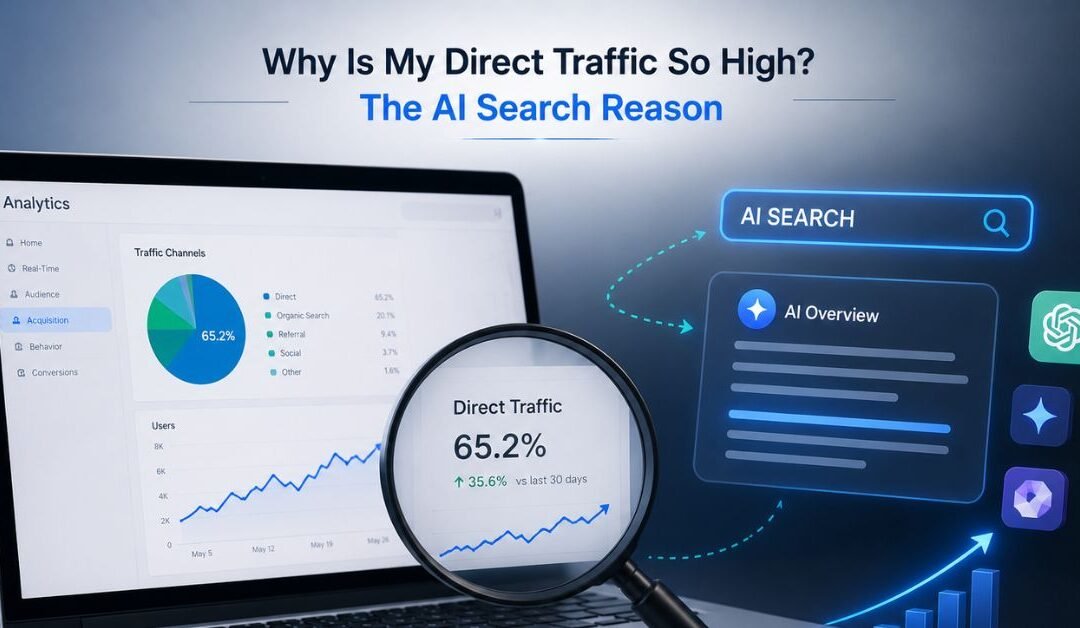
Two things happened in the SEO industry this week that, on their own, look like inside-baseball tool updates. Put together, they explain something a lot of business owners are seeing on their own analytics dashboard right now: "Direct" traffic climbing while "Organic Search" looks flat or shrinking.
If that's your dashboard, the instinct is to assume your SEO has stopped working. Before you act on that, it's worth five minutes to check whether it's actually working better than your reports show.
What "Direct" Traffic Actually Means
Google's own documentation is blunt about this: the Direct channel is what a visit gets labelled when Google Analytics can't identify where it came from. No referrer, no campaign tag, no recognisable source. It's less "this person typed your URL from memory" and more "we genuinely don't know."
That catch-all bucket has always absorbed some noise: bookmarks, links in PDFs, links from apps that strip tracking data. But a new source of noise has become large enough to actually move the number, and it's tied directly to how people are now finding businesses.
For most small and mid-size businesses, nobody is actively watching for this. A monthly report lands, Organic Search is flat or slightly down, Direct is up, and the natural conclusion is that whatever's driving Direct, brand recognition, word of mouth, repeat customers, is doing the heavy lifting instead of search. That conclusion might be right. Increasingly, though, it's wrong in a specific and checkable way.
The New Reason: AI Citation Clicks Are Landing as "Direct"
A nine-month study tracking over 51,000 AI Overview citation events, published this week, found that on average 22.4% of clicks from Google's AI Overviews were misattributed to the Direct channel instead of Organic Search. In the worst month tracked, that figure hit 29.3%.
Metric
Finding
AI Overview citation events tracked
51,200+ over 9 months
Average share misattributed to Direct
22.4%
Worst month (May 2026)
29.3% misattributed
Source: Search Engine Land, nine-month AI Overview citation tracking study, August 2026
The mechanism is simple once you see it. When someone clicks a link inside an AI Overview, ChatGPT, or Perplexity answer, the click often arrives at your site without a referrer header, the piece of information a browser normally sends that says "this visitor came from Google" or "this visitor came from Bing." AI interfaces don't consistently pass that along. Google Analytics can't label a visit "AI search" if it has no way of knowing that's what happened, so it defaults to Direct.
This isn't a fringe issue limited to one study. Independent analysis of AI referral traffic more broadly has found a similar pattern: a majority of clicks from AI chat tools arrive with no referrer at all and land in Direct by default, not just occasionally, but as the normal behaviour of how these platforms currently work.
It's Not Just Analytics — "Search Volume" Is Shifting Too
The second development is on the input side, not the output side. Ahrefs is rolling out what it calls "AI-adjusted Volume", a blended estimate that combines traditional Google search volume with modelled demand from ChatGPT, Perplexity, and other AI platforms. No AI provider publishes real prompt data publicly, so this is Ahrefs' best estimate, not a direct measurement, but it's about to become the default. The toggle to see plain, old-fashioned Google search volume disappears from Ahrefs' Brand Radar reports on August 31, 2026.
If your SEO reporting includes keyword volume or demand figures from a tool like this, some of what you're being shown may already be a blended AI estimate rather than a pure Google number, whether or not anyone has mentioned the change.
Ahrefs' own reasoning for the change is worth understanding, not just the deadline. No AI platform, not ChatGPT, not Perplexity, not Gemini, publishes real prompt data the way search engines have historically shared search volume data with tool vendors. So the new figure is modelled: it takes a prompt's closest matching Google keyword, looks up that keyword's known search volume, then applies a platform-specific ratio built from Ahrefs' own traffic data to estimate how often something similar gets asked inside AI tools. It's a reasonable estimate, but it is an estimate, built on a proxy, not a direct count. Worth knowing which one you're looking at before you make a decision based on it.
Why This Actually Matters for Your Business
There are two ways to get this wrong, in opposite directions.
The first is concluding your SEO has stopped working because "Organic Search" looks flat while "Direct" climbs, and cutting the budget for a channel that's actually performing, just being counted in the wrong column. If a chunk of your real organic and AI-search performance is quietly landing in Direct, your reports are underselling what's working.
The second is the opposite mistake: treating a rising Direct number as proof of growing brand strength, "people know us well enough to type our name straight into the address bar", when a meaningful share of it is just AI referral leakage. Neither read is safe without actually checking.
This is also a budget conversation, not just a curiosity. Marketing spend gets allocated based on which channels appear to perform. If a content or SEO investment is quietly earning AI citations that show up as Direct instead of Organic, the reporting can make that spend look weaker than it is, right at the point someone is deciding whether to renew it.
A Check You Can Run Yourself
This takes about five minutes in Google Analytics 4 and needs no extra tools. Go to Reports, then Acquisition, then Traffic acquisition, and filter the table down to the Direct channel. Then add or switch to the Landing page dimension.
Look at what's actually showing up. A homepage getting Direct traffic is normal, people do type in short, memorable URLs. A deep blog post, a comparison page, or an FAQ page with a long, specific URL getting a steady stream of "Direct" visits is a different story. Almost nobody memorises or types a URL like that from scratch. That pattern is a strong sign you're looking at AI-citation clicks landing in the wrong bucket, not genuine direct visits.
Cross-check those same pages against Search Console, if they're also picking up impressions for informational, question-style queries, that reinforces the read: people are finding this content through search and AI answers, then arriving with the trail erased.
What to Ask Your SEO or Agency
Ask whether your reporting separates likely AI-citation traffic from genuine direct visits, at the landing-page level, not just the channel total.
Ask whether the keyword or demand figures in your reports are classic Google search volume, an AI-adjusted blend, or unlabelled either way.
Ask for a technically clean website and analytics setup as a baseline. Custom channel groupings and landing-page pattern checks only work if the tracking underneath them is sound.
If your SEO reporting still only shows channel-level totals with no landing-page detail, that's worth raising, not because the agency is doing something wrong, but because the standard GA4 setup genuinely can't tell this story on its own.
None of this changes what actually earns the click in the first place: content clear and specific enough that an AI system chooses to cite it, and a search engine chooses to rank it. That's still the same job as before, it's the measurement of the result that's gotten harder. If your content is thin or vague, no amount of attribution cleanup will fix the underlying problem.
FAQ
Why is my Direct traffic suddenly so high?
It could be genuine, but a documented and growing cause is AI search. When someone clicks a link from an AI Overview, ChatGPT, or Perplexity answer, the click often arrives without a referrer header, so Google Analytics can't identify the true source and defaults to Direct.
How much AI traffic actually gets miscounted as Direct?
A nine-month study tracking over 51,000 AI Overview citation events found an average misattribution rate of 22.4%, peaking at 29.3% in one month. Broader analysis of AI chat referral traffic beyond just AI Overviews has found even higher shares landing in Direct.
How do I check if my Direct traffic is really AI search?
In GA4, filter Traffic acquisition to the Direct channel and switch to the Landing page dimension. Deep, specific pages, blog posts, comparisons, FAQs, getting steady Direct visits is a strong sign of AI-citation leakage rather than genuine typed-URL traffic.
What is "AI-adjusted Volume" and why does it matter?
It's a new metric from Ahrefs that blends traditional Google search volume with modelled AI-platform demand, since no AI provider shares real prompt data publicly. It's becoming the default in Ahrefs' reporting from August 31, 2026, so keyword and demand figures you're shown may already include this blend.
Should I stop trusting my Organic Search numbers?
No, but treat them as a floor, not the full picture. Your real organic and AI-search performance is likely at least as good as your reports show, and possibly better, since some of it is currently being counted as Direct instead.
The Takeaway
If your Direct traffic has been creeping up while Organic Search looks stagnant, that's not automatically a verdict on your SEO. It might be AI search working exactly as intended, just landing in the wrong column of your report. A five-minute landing-page check in GA4 will tell you which story is true for your business. If you'd rather have someone else run that check and explain what it means for your numbers, get in touch and we'll walk through it with you.
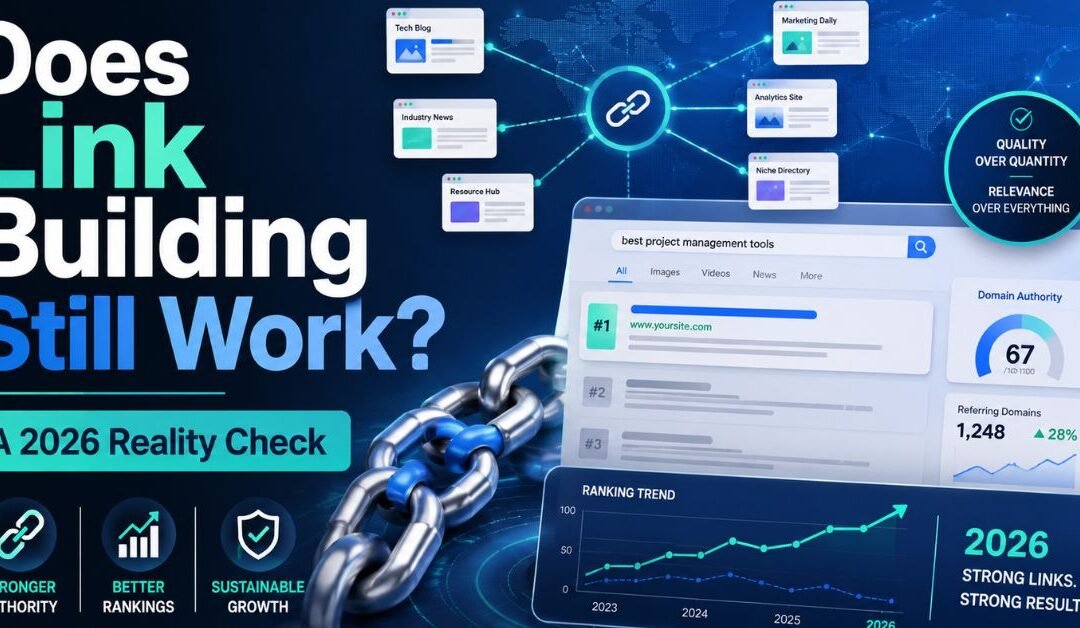
Google's own search advocate has said the company needs "very few links" to rank a page. This week, a fresh study of 35,000 real ChatGPT citations found that Reddit and Wikipedia together outrank every news publisher on earth as a source AI search trusts. So why are small businesses still being sold "50 backlinks a month" packages like it's 2015?
If you're a business owner paying for SEO, or being pitched on it, this is worth five minutes of your time. It's not a technical question. It's a budget question: where should your money actually go in 2026?
What Google Actually Said About Links
Backlinks have been central to SEO since Google's founding. PageRank, the original algorithm, was built almost entirely on the idea that a link from one page to another was a vote of trust. For two decades, "get more links" was close to the entire industry's advice.
That's been changing for longer than most business owners realise. In April 2024, Google's Gary Illyes, a longtime member of Google's Search Relations team, told a room of SEOs at SERP Conf in Bulgaria: "We need very few links to rank pages… Over the years, we've made links less important." The remark travelled fast enough through the industry that Illyes later half-joked on X that he "shouldn't have said that."
Read that carefully, because the nuance matters. Illyes didn't say Google ignores links. He said Google needs fewer of them, and weighs each one less than it used to. For a business owner, the practical translation is this: quantity-based link building, the kind sold in bulk monthly packages, has been losing value since at least 2024. That's a Google story, not an AI story. AI search has simply made the gap impossible to keep ignoring.
What's Actually Earning Visibility Now
Search Engine Land published an analysis on August 13, 2026 of 35,000 real ChatGPT citations across industries. The finding: user-generated content platforms, mainly Reddit, Wikipedia, and LinkedIn, account for 17.1% of all cited domains. That's more than four times the share held by news publishers, which came in at 4.0%. Wikipedia, Reddit, and LinkedIn alone make up 99% of those UGC citations.
Source: Search Engine Land, analysis of 35,000 ChatGPT citations, August 2026
Why does a Reddit thread outweigh a press mention in an AI model's eyes? Large language models are trained heavily on forum and community text, and they tend to treat it as a proxy for authentic, unpaid opinion, the opposite of a press release or a sponsored post. A mention of your business in a niche forum or an industry community can carry real weight with an AI answer engine, even with no link attached at all.
That's not a reason to abandon publisher coverage or PR entirely. It's a reason to stop assuming publisher backlinks are the only thing that counts, when the data says they're currently the smaller share of what AI models actually cite.
This matters more for small and mid-size businesses than it does for national brands. A large brand already has a press archive and a Wikipedia page working in its favour. A local plumber, a regional accounting firm, or a niche ecommerce store rarely does, but that same business often already has something more valuable sitting unused: real customers talking about it in Facebook groups, local subreddits, and review threads. That's the raw material AI models are reading. Most businesses just haven't thought to treat it as an SEO asset.
The "Ghost Citation" Problem
Before you redirect your entire budget toward Reddit threads, one more data point matters. Semrush's research on what it calls "ghost citations" found that 62% of AI citations don't actually produce a visible brand mention in the answer a user reads. In other words: an AI tool can pull facts from your website or a page describing your business, and never once say your business's name to the person asking the question.
This cuts both ways for a business owner. It means citations alone aren't the finish line, being named matters as much as being sourced. And it means any "AI visibility" report that counts citations without checking whether your brand name actually appears in the answer is overstating how visible you really are. If a tool or an agency shows you a citation count and nothing else, ask to see the actual answers.
So Should You Stop Paying for Backlinks?
No, but you should stop paying for the wrong kind, and this is the part most agencies won't tell you, because it's their product.
If your current spend is a fixed number of links per month from anonymous "guest post" networks, private blog networks, or link farms, that's exactly the product Google has been devaluing since 2024. It's also not the kind of mention that shows up in the AI citation studies above. You're paying twice for something that's worth less than it used to be in either system.
What still earns its budget is narrower: a handful of genuinely relevant links from real publications, earned through digital PR or expert commentary rather than bought in bulk, sitting on top of a technically solid website that's actually worth linking to in the first place. If your site itself is the weak link, that's a website development problem before it's a link-building one.
There's also a trust cost to the old playbook that rarely makes it into the sales pitch. Google has spent years penalising sites caught in obvious link schemes, and the same low-quality networks that no longer move rankings much can still trigger a manual action if Google decides they cross the line. That's a real, if less common, downside risk attached to a tactic that's already delivering less upside than it used to. Weigh that against the near-zero downside of building a genuine review and community presence, and the budget decision gets easier.
Old playbook
Better use of the same budget in 2026
Fixed monthly quota of links from anonymous or low-quality sites
A small number of earned links from relevant, real publications
No presence outside your own website
Active, accurate presence on the review sites and forums your customers actually use
Reporting that only counts link volume
Checking whether your brand is actually named in AI answers, not just cited
A Check You Can Run Yourself
This takes five minutes and costs nothing. Open ChatGPT, Gemini, or Google's AI mode and ask the question your customers would actually ask, something like "best [your service] in [your city]" or "who does [what you do] well." See if your business is named. Then, separately, search "[your business name] reddit" and "[your business name] reviews" in a normal search engine. If neither returns anything meaningful, no amount of paid backlinks is going to fix what's actually missing: a genuine footprint in the places AI models are reading from.
The pattern holds up across the client sites we work on: businesses with an active review profile and some real community presence tend to get named in AI answers even when their backlink count is modest. Businesses with a large but generic link profile and no community footprint often don't, however many links point at their homepage.
What to Do With Your SEO Budget Instead
Keep a small, high-relevance link-building effort aimed at real publications and partners, not volume vendors selling links by the dozen.
Put real budget into content worth citing on its own merits: original data, direct answers to the questions your customers actually ask, pages that don't need a backlink to be useful.
Claim and actively manage your presence on the review sites and forums relevant to your industry. This is where AI models are increasingly pulling from, with or without your permission.
Get a specialist's read on your current link spend rather than guessing. A proper SEO review will show whether your current spend matches what's actually moving the needle for your business today.
FAQ
Is link building dead in 2026?
No. Google's own team has said links matter less than they used to, not that they don't matter at all. What's changed is that link volume from low-quality sources carries little to no benefit, while a smaller number of relevant, earned links still helps.
Do unlinked brand mentions help SEO?
They help AI visibility more directly than they help traditional SEO. Large language models are trained on raw text, not just hyperlinks, so a mention of your brand in a forum thread or review, even without a link, can influence whether an AI tool names or cites you.
How many backlinks does a small business actually need?
There's no fixed number to chase. Google's Gary Illyes has said the company needs "very few links" to rank a page well, so the goal should be relevance and quality over raw quantity.
What is a "ghost citation" in AI search?
It's when an AI tool pulls information from your site as a source but never actually names your brand in the answer the user sees. Semrush's research found this happens in 62% of AI citations, meaning being a source and being visible to the customer are two different things.
Should I fire my link-building agency?
Only if they can't tell you where your links are actually coming from. If the answer is a fixed monthly quota from unnamed sites, that spend is better redirected toward digital PR, reviews, and genuine community presence.
The Takeaway
Links aren't dead. The link-building industry's old pitch, more links, delivered monthly, from wherever, is. Google has been saying so since 2024, and AI search has just made the gap impossible to ignore. If you're not sure whether your current SEO spend matches where visibility is actually coming from now, get in touch and we'll show you exactly what's working and what isn't.
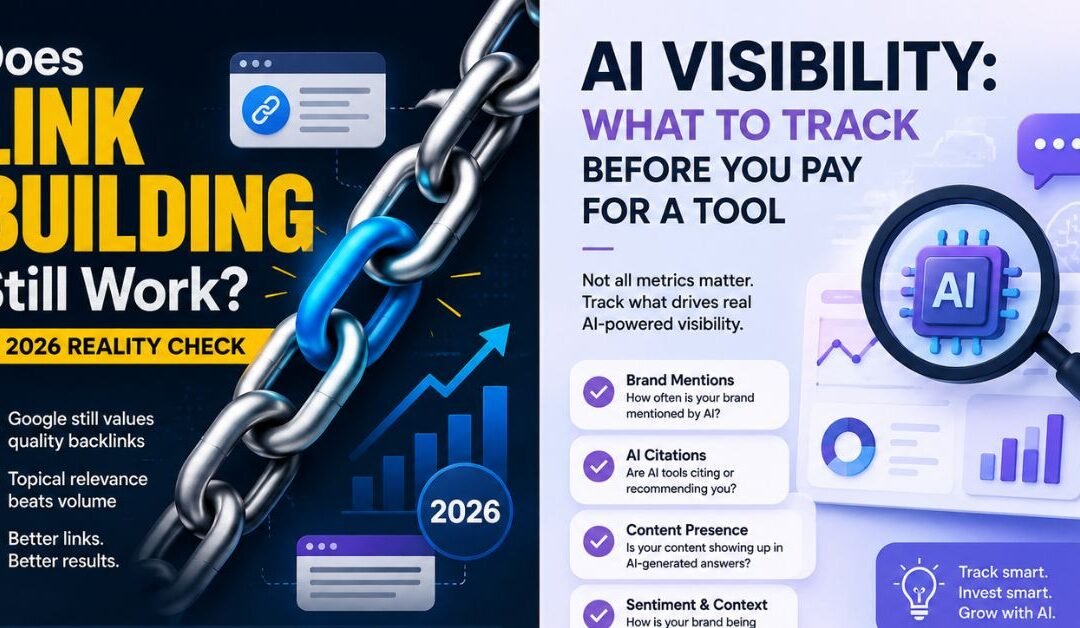
Over the past year, a new category of software showed up in every marketing tool roundup: the "AI visibility tracker." It promises to tell you whether ChatGPT, Perplexity, or Google's AI Overviews mention your business when someone asks a relevant question. Prices for these tools typically run $200 to $500 a month, and vendors are moving fast — Semrush, Ahrefs, HubSpot, and a wave of newer startups like Profound and Scrunch have all launched competing products in the last twelve months.
If you own a business and someone — an agency, a consultant, a tool's own marketing page — has told you that you need to start tracking your "AI visibility" right now, it's worth pausing before you buy anything. The data on how AI search actually works, published by the same companies selling these tools, tells a more complicated story than the sales pitch does.
What "AI visibility" actually means
"AI visibility" is shorthand for how often, and how accurately, your business shows up when someone asks an AI assistant a question related to what you do. That could mean ChatGPT recommending you by name, Perplexity citing your website as a source, or Google's AI Overviews summarizing your services alongside competitors.
It's tempting to treat this like a new version of search rankings — track your "position," report on it monthly, optimize toward a number. That comparison breaks down quickly. There's no fixed results page. The same question can get a different answer twice in a row. And a business can be recommended by an AI system without its website ever being cited or clicked.
Tom Capper, a search consultant who does regular AMAs on Moz's blog, put it this way in a recent one: “AI search doesn't send traffic the same way traditional search did… A recommendation can still be a win even when your site isn't the one cited.” If someone asks an AI assistant for a plumber recommendation and it names your business while citing a local directory instead of your homepage, that's still visibility — even though nothing in your analytics will show it.
The data behind the sales pitch
Before spending money on a tracking tool, it's worth understanding what the industry's own research says about how AI mentions actually get distributed. Two recent studies are useful here, and both come from companies that sell AI visibility tools — which makes the caution in their own findings notable.
Semrush, working with SEO analyst Kevin Indig, tracked 1,094 US product and service categories in ChatGPT from January through June 2026. The finding: only 15.2% of categories had a clear brand "owner" — meaning one company that reliably appeared across the majority of related questions. For a business to count as a category owner, it had to appear in at least four of five related prompts with a real lead over whoever came second. The other 85% of categories showed no consistent winner. The study also found that only 21% of the most-cited websites in a category belonged to the most-mentioned brand — being mentioned by name and being the source an AI cites are frequently two different companies entirely.
Moz ran a separate experiment, generating 50,000 AI "fan-out" prompts (the follow-up questions an AI system generates behind the scenes to answer a broader query) across 1,000 subtopics. Researcher Dr. Pete Meyers found that even when a brand and its competitors were deliberately fed into the prompt-generation process as hints, only 12.8% of the resulting prompts ended up mentioning any brand at all. Most of the "conversation" an AI system has with itself while researching an answer never touches brand names — it's about the topic, not the company.
Put together, these numbers suggest that for the large majority of categories and queries, there's no stable "ranking" to track yet, and a fair amount of what a $300/month tool would report back to you is noise from month to month rather than a signal you can act on.
What Google Search Console will (and won't) tell you for free
You don't need a third-party subscription to see some of this. In June 2026, Google added generative AI performance reporting directly to Search Console, at no cost, for sites in the rollout. It's worth knowing exactly what it does and doesn't cover before you assume it replaces a paid tool — or before you assume you need a paid tool to get this data at all.
What Google's report shows
What it doesn't show
Impressions in AI Overviews, AI Mode, and AI-powered Discover
Click-through rate
Which pages appeared
Individual queries or prompts
Country-level breakdown
Which AI-generated answer your page appeared in
Device breakdown
Competitor comparisons
That's a real limitation. You'll know your pages showed up somewhere in Google's AI features, but not what was asked, what was said about you, or whether a competitor was mentioned instead. Google has also confirmed the rollout is still limited to a subset of sites, starting in the UK, so not every Search Console account has access yet.
A DIY check you can run this week
Before paying for a dedicated platform, there's a manual version of the same exercise that costs nothing but half an hour:
Write down the 5–10 questions a real customer would type into ChatGPT or Google's AI Mode when they're close to hiring someone in your category — not generic industry questions, but the actual buying-decision ones ("best [service] in [your industry] for [specific need]").
Ask each one in ChatGPT, Perplexity, and Google AI Mode, in a fresh/incognito session so past history doesn't skew the answer.
Record three things for each answer: were you mentioned, were you cited as a source, and was the description of your business accurate.
Repeat monthly. Consistency matters more than volume — the Semrush data above shows that a single appearance means very little; a business only "owns" a topic once it shows up reliably across related questions.
This won't give you impression counts or trend charts, but it answers the question that actually matters for a small or mid-sized business: not "what's my score," but "if a customer asked, would I show up, and would the answer be right."
When a paid tool is actually worth it
None of this means AI visibility tools are a bad purchase for everyone. They start to earn their cost once a few things are true for your business:
You compete in a category with real commercial stakes per lead (legal, healthcare, financial services, high-ticket home services) where losing a recommendation to a competitor is expensive.
You operate across enough locations, product lines, or service categories that manually checking prompts monthly isn't realistic.
You already have a working SEO and content program in place, and AI visibility tracking would be additive intelligence — not a replacement for the fundamentals.
If none of those apply yet, the DIY check above, combined with Search Console's free reporting, covers most of what a small business actually needs to know for now.
What actually moves the needle
Both studies point to the same underlying lever: AI systems build their answers from sources they consider trustworthy on a given topic, and a citation on a well-regarded third-party site does more for visibility than anything you can change on your own homepage alone. That's a case for two things that predate the "AI visibility" trend by years: getting accurate, consistent coverage from other reputable sites in your industry (what's traditionally called digital PR or earned media), and making sure your own site's content clearly and accurately describes what you do, so that when an AI system — or a person — does land on it, the description holds up.
Our SEO services work is built around exactly this: earning the kind of third-party visibility that both AI systems and traditional search reward, rather than chasing a vanity metric that resets every month. If your own site's content is thin or outdated, that's also worth fixing first — our content creation work focuses on making sure what's on your pages actually describes your business accurately, which matters whether the reader is a person or a language model. None of that helps if AI crawlers can't reach or parse your site in the first place, so it's also worth confirming the technical basics are solid — our website development work covers exactly that groundwork.
Takeaway
The AI visibility tool market grew fast, but the research these same companies have published shows the underlying signal is still noisy: most categories don't have a stable "winner," most AI-generated questions never mention a brand, and even Google's own free reporting only shows impressions, not the full picture. For most small and mid-sized businesses, a monthly manual check plus free Search Console data will tell you what you need to know for now. If you want help figuring out whether your business is showing up accurately — in AI answers or regular search — get in touch and we'll walk through it with you.
FAQ
Do I need to buy an AI visibility tool right now?
Not necessarily. Unless you're in a high-stakes category with real per-lead value, or managing visibility across many locations or product lines, a monthly manual check across ChatGPT, Perplexity, and Google AI Mode plus free Search Console data covers most of what a small business needs.
What does Google Search Console's new AI report actually show?
Impressions, which pages appeared, country, and device — for sites in Google's limited June 2026 rollout. It does not show click-through rate, the specific questions asked, or which AI-generated answer your page appeared in.
Can my business be recommended by AI without my website being cited?
Yes. AI systems can name your business while citing a different source, like a directory or review site, for the underlying information. That's still a form of visibility, even though it won't show up in your website analytics.
How often should I check my AI visibility manually?
Monthly, using the same set of buying-decision questions each time. A single appearance in an AI answer means very little on its own — research from Semrush found that reliable, repeated appearance across related questions is what separates a real "topic owner" from a one-off mention.
Does having good SEO automatically improve AI visibility?
It helps, but it's not the same thing. AI systems weigh third-party coverage and how consistently other trusted sites describe your business, alongside your own site's content. A strong SEO and digital PR foundation supports AI visibility, but ranking well in traditional search doesn't guarantee an AI system will recommend you by name.