by iajyhooda | Mar 20, 2025 | Web Development
Introduction
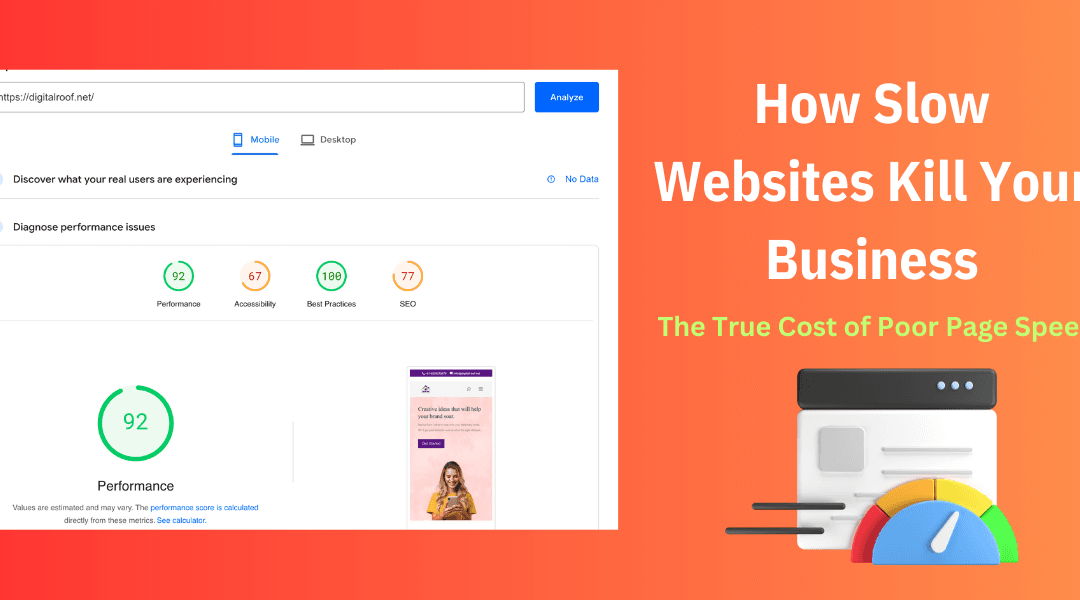
Did you know that 53% of mobile users leave a website if it takes longer than 3 seconds to load? In the fast-paced digital world, users demand instant access to information. If your website loads slowly, you’re not just testing their patience—you’re losing potential customers, damaging your SEO rankings, and hurting your revenue.
In this blog, we’ll explore how slow websites can kill your business, the true costs of poor page speed, and how you can fix it to boost conversions, user experience, and SEO performance.
The Impact of Slow Website Speed on User Experience
Imagine this: A potential customer visits your website to check out a product or service. Instead of loading instantly, the page lags, taking 5-6 seconds to fully display. Frustrated, they hit the back button and go straight to your competitor.
This scenario plays out every day for businesses with slow websites. Here’s how poor page speed negatively affects user experience:
High Bounce Rates
- Visitors leave quickly when they experience delays.
- A study by Google found that a 2-second delay increases bounce rates by 32%, while a 5-second delay increases it by 90%.
Negative Brand Perception
- A slow website signals poor quality and untrustworthiness.
- Customers may assume your business is outdated or unprofessional.
Reduced Engagement & Conversions
- Visitors are less likely to browse more pages or complete a purchase.
- Slow load times affect key actions like signing up for newsletters, making payments, or filling out contact forms.
Example: If an e-commerce store takes more than 3 seconds to load, users are 79% less likely to return.
The SEO Consequences of a Slow Website
Google has officially stated that page speed is a ranking factor for SEO. If your site is slow, your rankings suffer, which means less organic traffic and fewer leads.
Core Web Vitals & SEO Impact
Google’s Core Web Vitals focus on three key factors related to page speed:
- Largest Contentful Paint (LCP) – Measures how quickly the main content loads.
- First Input Delay (FID) – Measures how interactive your site is.
- Cumulative Layout Shift (CLS) – Measures stability during loading.
A slow-loading website negatively affects all three, pushing your site lower in search results.
Reduced Google Crawling Efficiency
Googlebot allocates limited crawl budget to each website. A slow website means fewer pages get indexed, reducing your chances of ranking well.
Lower Mobile Search Rankings
Since Google uses mobile-first indexing, slow mobile pages hurt rankings even more.
Case Study: A travel blog improved its page speed from 5 seconds to 2 seconds, leading to a 30% increase in organic traffic.
Slow Websites Lead to Lost Conversions & Revenue
Website speed isn’t just about user experience—it directly impacts your sales and revenue.
Every Second of Delay = Lost Sales
- Amazon reported that a 1-second delay in load time could cost them $1.6 billion in annual revenue.
- For small businesses, a slow website means losing potential customers to competitors.
Cart Abandonment Rates Skyrocket
- 75% of online shoppers say they won’t return to a site that was too slow.
- A slow checkout process leads to higher abandoned carts and lost sales.
Lower Trust & Credibility
- A sluggish website gives the impression of poor customer service and security risks.
- Users are less likely to enter payment details on a slow-loading site.
Example: A SaaS company improved its load time by 1.5 seconds and saw a 15% increase in subscriptions.
Mobile Users Suffer the Most
With more than 60% of web traffic coming from mobile devices, page speed is even more critical.
Mobile Users Are Less Patient
- Mobile users expect instant access and won’t wait for a slow page to load.
- Network issues (like 3G or slow WiFi) make slow websites even worse.
Google’s Mobile-First Indexing Affects Rankings
- Since 2018, Google ranks websites based on their mobile performance.
- A slow mobile website loses rankings faster than a slow desktop site.
Fact: 70% of consumers say page speed directly influences their purchasing decisions on mobile.
The Hidden Costs of a Slow Website
Beyond lost customers and rankings, a slow website comes with additional hidden costs:
Increased Server Costs
- A slow site uses more server resources, increasing hosting expenses.
- Poor performance leads to higher bandwidth consumption.
Wasted Ad Spend
- Businesses investing in Google Ads or Facebook Ads lose money if the landing page loads slowly.
- A high bounce rate means lower Quality Score, leading to higher ad costs.
Lost Referral & Social Traffic
- Slow pages don’t perform well on social media platforms.
- If a page takes too long to load, users won’t share or link to it.
Example: A marketing agency reduced bounce rates by 40% just by improving page speed.
How to Improve Your Website Speed (Quick Fixes & Long-Term Solutions)
Optimize Images & Videos
- Compress large images using TinyPNG or JPEG Optimizer.
- Use next-gen formats like WebP for faster loading.
Use a Content Delivery Network (CDN)
- CDNs store copies of your website across global servers to reduce load time.
Minify & Combine CSS, JavaScript, and HTML
- Remove unnecessary code spaces and comments to improve efficiency.
Enable Browser Caching
- Stores static files on users' browsers, reducing load time on repeat visits.
Upgrade to Faster Hosting
- Choose a reliable, high-speed hosting provider like SiteGround, Cloudways, or WPX Hosting.
Use Website Speed Testing Tools
- Regularly check performance with Google PageSpeed Insights, GTmetrix, and Lighthouse.
Conclusion
A slow website doesn’t just annoy visitors—it kills conversions, reduces SEO rankings, and costs you revenue. Businesses that prioritize fast page speeds gain higher engagement, better search visibility, and increased sales.
If your website is slow, it’s time to take action! Start by optimizing your images, using a CDN, enabling caching, and upgrading your hosting.
Need help improving your website speed? Contact us today for a free audit!
by iajyhooda | Jan 12, 2024 | Web Development
Understanding the Importance of Professional Website Development Services
In today's digital age, having a strong online presence is crucial for any business. Professional website development services play a vital role in creating a powerful and engaging platform for your brand. By entrusting experts in web design and development, you ensure a custom website that caters to your unique business needs. A professionally developed website not only enhances the user experience but also boosts search engine visibility, leading to increased traffic and potential customers. Don't underestimate the impact of a well-crafted website—investing in professional web development can make all the difference in your online success.
The Key Elements of Successful Website Development
When it comes to crafting a winning online presence, website development is crucial. The foundations of success rely on expertly executed design, responsive web development, and intuitive user experience (UX) design. The front-end development ensures a visually appealing and user-friendly interface, while the back-end development takes care of the site's functionality and performance. By integrating these key elements, businesses can create websites that captivate visitors and drive meaningful interactions, leading to higher engagement and better conversion rates. Mastering these aspects will pave the way for a thriving online presence and a competitive edge in the digital landscape.
Choosing the Right Website Development Company for Your Project
Finding the ideal web development agency is crucial to ensure your online success. With a multitude of website developers out there, choosing the right website design company can be a daunting task. However, by considering certain key factors, you can make an informed decision. Evaluate their portfolio, client testimonials, and expertise in your niche. Additionally, assess their communication and project management skills. A reliable web developer will understand your vision and deliver a user-friendly and visually appealing website. Trust a seasoned agency to bring your online ventures to fruition with utmost professionalism.
The Different Types of Website Development Services Available
- E-commerce Website Development: Boost your sales and broaden your reach with an expertly crafted e-commerce website. Our team ensures seamless functionality, secure payment gateways, and a user-friendly interface to enhance customer satisfaction.
- CMS-based Website Development (WordPress): Manage your content effortlessly with our CMS-based solutions, particularly WordPress. Benefit from its flexibility, ease of use, and search engine-friendly nature for optimal online visibility.
- Custom Web Application Development: Tailored to your unique requirements, custom web applications provide a competitive edge. Our team designs and develops innovative solutions to cater precisely to your business needs.
The Process of Building a Website: From Planning to Launch
- Website Planning and Strategy: A successful website begins with a robust plan and a clear strategy. Identifying the target audience, defining goals, and outlining the site's structure is crucial at this stage. Comprehensive research and competitor analysis are essential to gaining a competitive edge and creating a website that aligns perfectly with the brand's vision.
- Wireframing and Prototyping: Once the planning phase is complete, creating wireframes and prototypes comes into play. These visual representations allow designers and stakeholders to visualize the layout, structure, and user interface of the website. It helps in identifying potential design flaws and streamlining the user journey before moving on to the development phase.
- Content Creation and Management: Compelling content is the backbone of any website. During this stage, content creation, including text, images, and multimedia elements, takes place. A well-organized content management system (CMS) is employed to facilitate easy content updates and maintenance, ensuring the site remains fresh and engaging.
Conclusion
Website development services form the cornerstone of a successful online presence. From captivating design to advanced functionality, understanding the nuances of website development empowers you to make informed decisions for your digital venture. Embrace these insights, and watch your website thrive in the ever-evolving digital landscape.

by iajyhooda | Jan 5, 2023 | Web Development
Are you looking for a web development company in India to help bring your online vision to life? Choosing the right web development company can be a daunting task, but it's an important decision that can make or break the success of your website. In this guide, we'll cover everything you need to know to find the right web development company in India, including what to look for in a web development company, how to find the right fit for your business, and tips for ensuring a successful collaboration.
What does a web development company do?
First, let's define what a web development company does. A web development company is a firm that specializes in building and maintaining websites for clients. Web development involves a range of activities, including designing and coding the front-end and back-end of a website, integrating with databases and other systems, and ensuring that the website is optimized for search engines and user experience.
Now that we've defined what a web development company does, let's dive into what to look for when choosing one. Here are a few key factors to consider:
- Expertise and experience: It's important to choose a web development company that has a track record of successful projects and a deep understanding of web development best practices. Look for a company that has experience in your industry and has a portfolio of projects that showcase their skills.
- Responsiveness and communication: Good communication is key to any successful project. Choose a web development company that is responsive and proactive in their communication, and that takes the time to understand your needs and goals.
- Quality of work: Make sure to review the quality of work from the web development company's portfolio. Look for clean, modern designs and consider whether their style aligns with your vision for your website.
- Flexibility and adaptability: The web is constantly changing, so it's important to choose a web development company that is flexible and adaptable. Look for a company that is willing to pivot and make changes as needed, and that is open to new ideas and approaches.
- Cost: Cost is always a factor, but it's important to remember that you get what you pay for. Don't choose a web development company solely based on price, but consider it as one factor among many.
How to Find the Right Web Development Company for Your Business?
Now that you know what to look for in a web development company, it's time to start the search. Here are a few tips for finding the right fit for your business:
- Define your needs: Before you start looking for a web development company, take some time to define your needs and goals. What do you want your website to do? Who is your target audience? What features do you need? Having a clear idea of what you're looking for will make it easier to find a web development company that is a good fit.
- Do your research: Look for web development companies that have experience in your industry and that have a track record of successful projects. Read online reviews and ask for references to get a sense of the company's reputation.
- Look for specialization: Many web development companies specialize in certain technologies or industries. If you have specific needs, such as the need for a mobile app or integration with a particular system, look for a company that has experience in those areas.
Conclusion
So, if you are looking for a web development company, then Digital Rood is the best choice. We deliver what you ask for. From designing to development, we do everything according to your needs. Our utmost priority is to make your product a brand. And we provide all these services at a budget price. We believe in quality, not in quantity.

by iajyhooda | Dec 19, 2022 | Web Development
Web development refers to creating sites and applications for the internet and private networks. Web developers aren't concerned with how a site looks; they're interested in the back-end code and programming that makes the site work.
Everything people use on the internet was created by web developers; this includes everything from simple static pages to complex social media platforms and applications, from online stores to content management systems.
Skills Required for Web Development
One of web developers' most creative and challenging tasks is writing a thousand lines of code and turning that into a website. If you get inspired by beautiful websites and want to create something similar, here is some information about web development.
Anyone can learn to code websites. You can learn these skills effectively without investing in a pricey software engineering degree. Knowing a few things is essential before applying for web development jobs.
As its name implies, HTML is a markup language used to create web pages. It's an integral part of any website. As a front-end language, it provides a website with its fundamental structure, most notably in the form of tags.
"CSS" stands for "Cascading Style Sheets." The CSS gives the website its visual identity and personality behind the scenes of the HTML code. No style sheet language (CSS) means a boring website.
Using JavaScript, you can customize your web pages with various features. JavaScript allows for incorporating features like interactive maps and 2D/3D graphics into a website.
- Application Programming Interface (API)
Web developers spend a lot of time interacting with application programming interfaces (APIs), which control access to and manipulation of external data. Web designers can take advantage of the features without revealing the underlying code.
You can find a wealth of APIs and inspiration for new projects in the extensive GitHub repository. To learn more about public APIs, click on the link provided.
Your job description may include overseeing user authentication to keep tabs on who visits a given website. For instance, you may allow users to sign in, log out, and perform specific actions from their accounts while blocking access to certain pages for users who aren't logged in.
Authentication is crucial to ensuring the safety of user accounts. So, it's critical to understand how to control this feature in your web app.
Once you're comfortable with the front end, you can move on to the back end. This is the heart of the operation, where all information is stored.
Databases are used for storing, manipulating, and retrieving data. These days, most databases are stored in the cloud using frameworks like Azure or Amazon Web Services. Learning database management is a necessary skill.
This requires familiarity with either Structured Query Language (SQL) or NoSQL (used by MongoDB and Firebase).
Conclusion
Today, a well-designed web page is a necessity for any Web development. Having fewer people check out your site because of its poor layout is bad for business. A well-designed page must adhere to some standard conventions. A good balance should be between colors, fonts, layout, page size, graphics, and consistency.